Galileo Campus
BIS Road, Behind AP Fisheries, Poranki, VijayawadaEarly Years Village Campus
Municipal Employees Colony, Acharya Ranga Nagar, Benz Circle, Vijayawada
Galileo Campus
BIS Road, Behind AP Fisheries, Poranki, VijayawadaEarly Years Village Campus
Municipal Employees Colony, Acharya Ranga Nagar, Benz Circle, Vijayawada
The IB Primary Years Programme (PYP) for children aged 3 — 12 nurtures and develops young students as caring, active participants in a lifelong journey of learning
The Primary Years Programme (PYP) is a concept based, inquiry-driven curriculum framework. The PYP strives for a balance between the search for understanding, the acquisition of essential knowledge and approaches to learning (skills), the development of positive attitudes and the opportunity for impactful action.
In terms of achieving this balance, the PYP emphasizes four components:
Concepts – Powerful ideas which have relevance within and across the disciplines and which learners must explore and re-explore in order to deepen understanding
Approaches to learning – Skills the learners need to be able to succeed in a changing, challenging world such as thinking, research, social, communication and self-management skills.
Knowledge – Significant, relevant, subject matter.
Action – Taking positive action within and beyond our community.
Agency - Developing the capacity through skills and mindset to make a difference. At Bloomingdale, we unleash student agency through providing choices in their learning engagements, ensuring their voice is heard and incorporated in designing their learning pathways, and setting and tracking personal learning goals to develop ownership of their learning journey.
The PYP programme model shows all the elements that combine to form the coherent curriculum framework.
By inculcating in its learners, a desire to learn, a natural curiosity about the world, and develop the skills they need to ask questions and seek answers through research and inquiry.
By developing an understanding of social problems so that students can emerge as caring and responsible citizens.
By teaching them the tools for success in work and life – thinking, research, communication, self-management and social skills.
By developing an appreciation and understanding of one’s own, as well as other cultures to become internationally-minded citizens.
By enabling children to develop their voice and take charge of their own learning and development.
In the early years, children learn through play and experiential hands-on techniques.
A curriculum based on concept-driven units of inquiry inculcates a balance between knowledge, understanding, attitudes, and action.
Inquiry-based learning creates a curriculum framework that is integrated across disciplines.
Teaching is differentiated to meet the particular needs of each different individual. In addition to academics, a 3600 holistic approach is used to understanding each student and in providing experiences that cater to each student’s personal, social and physical growth. Multi-faceted co-curricular activities as part of regular teaching help foster holistic all-round development.
Teachers receive ample opportunities for professional development and growth. Teachers across the section collaborate and interact to integrate subjects, achieve shared learning goals and co-design learning strategies for each individual.
Parents partner with the school as resource persons and facilitators to enhance and support the learning environment for all students.
Inquiry-based learning creates a curriculum framework that is integrated across disciplines.


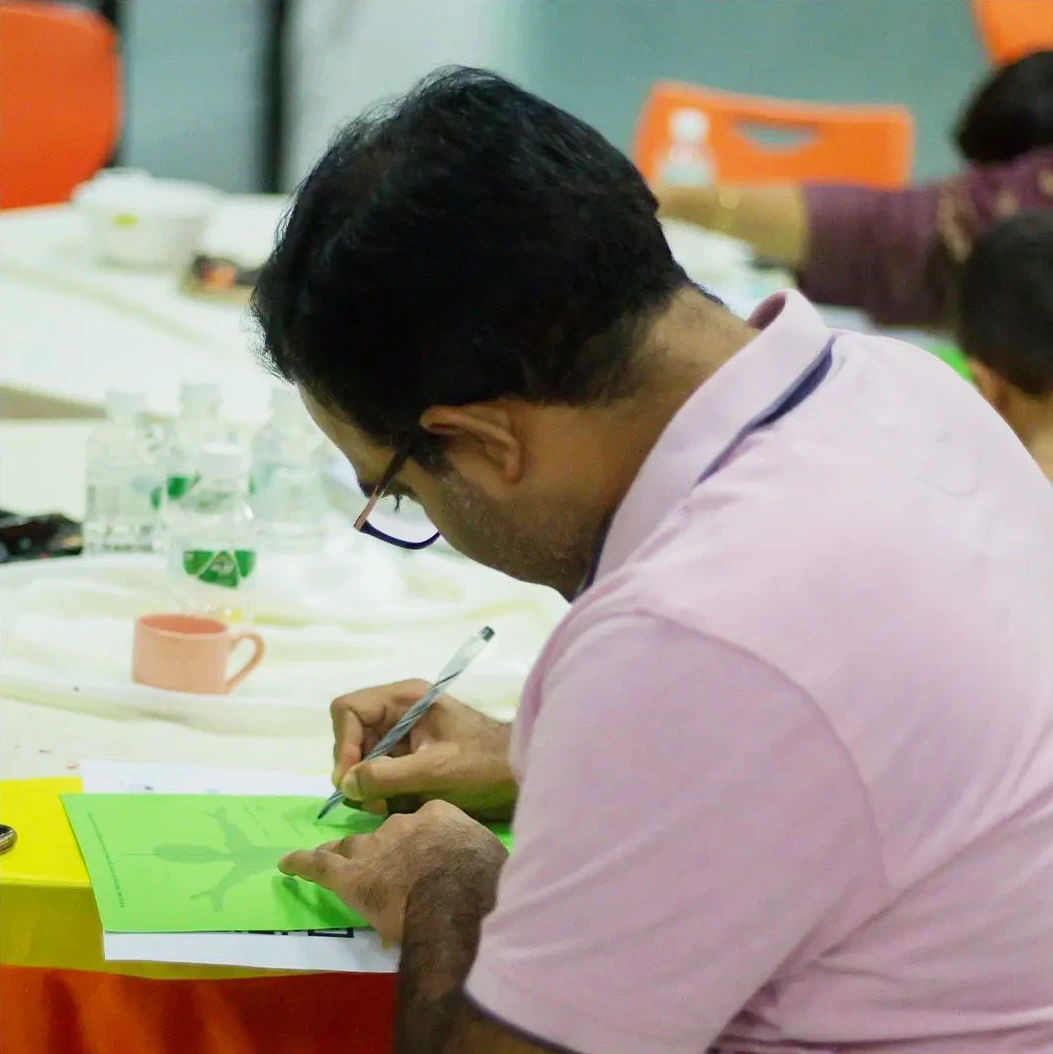
Having relocated to Vijayawada from Australia, I was looking for a school that had an international curriculum and teaching methods. My search stopped at Bloomingdale’s school. The IB curriculum has helped both my children to explore their world, and ask questions without being limited to a single book. It has motivated them to find answers through their own research (which in turn encourages them to read a variety of books and access various related media) and apply their learning to real life situations. Their personality is also becoming well rounded due to the balanced mix of academics with sports, music, dance and art on a daily basis.

We had relocated from USA to India and were looking for a suitable school for my daughter into 3rd grade. To help with this transition, we looked for a school with well-qualified teachers, low teacher-student ratio, focus on overall development, better infrastructure, and adequate supporting staff. The Bloomingdale School met all this criteria and more. We are very happy with the all-round progress that our daughter made in this one year with the School and the teachers' continued support.

My daughter had an amazing year truly filled with laughter, smiles, hugs and fun learning that she is so excited to go to school each day. I like the way my child's learning journey is recorded and communicated online through Toddle. The teachers and administrators were loving and supportive and fully accessible. I couldn't have chosen a better school for my child.

At Bloomingdale, learning is fun and joyful experience, so it always keeps the curiosity in kids alive. The biggest asset is its beautiful campus and the teachers who take good individual care. I am happy that my child will blossom into an individual with confidence and values.

We are very much satisfied with the grooming of our child Sreeaarya. Her overall development is very good. We see lot of improvement in her personality and attitude. She is learning lot of new things in school and communicating us and making us do the way teachers make her do :-) we thank teachers and all the staff for taking such good care of Sreeaarya Thank you.
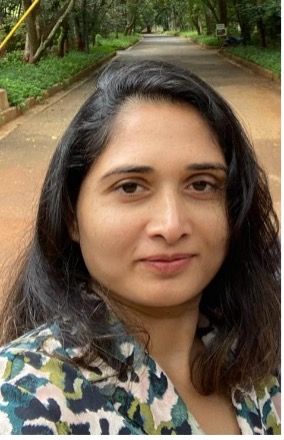
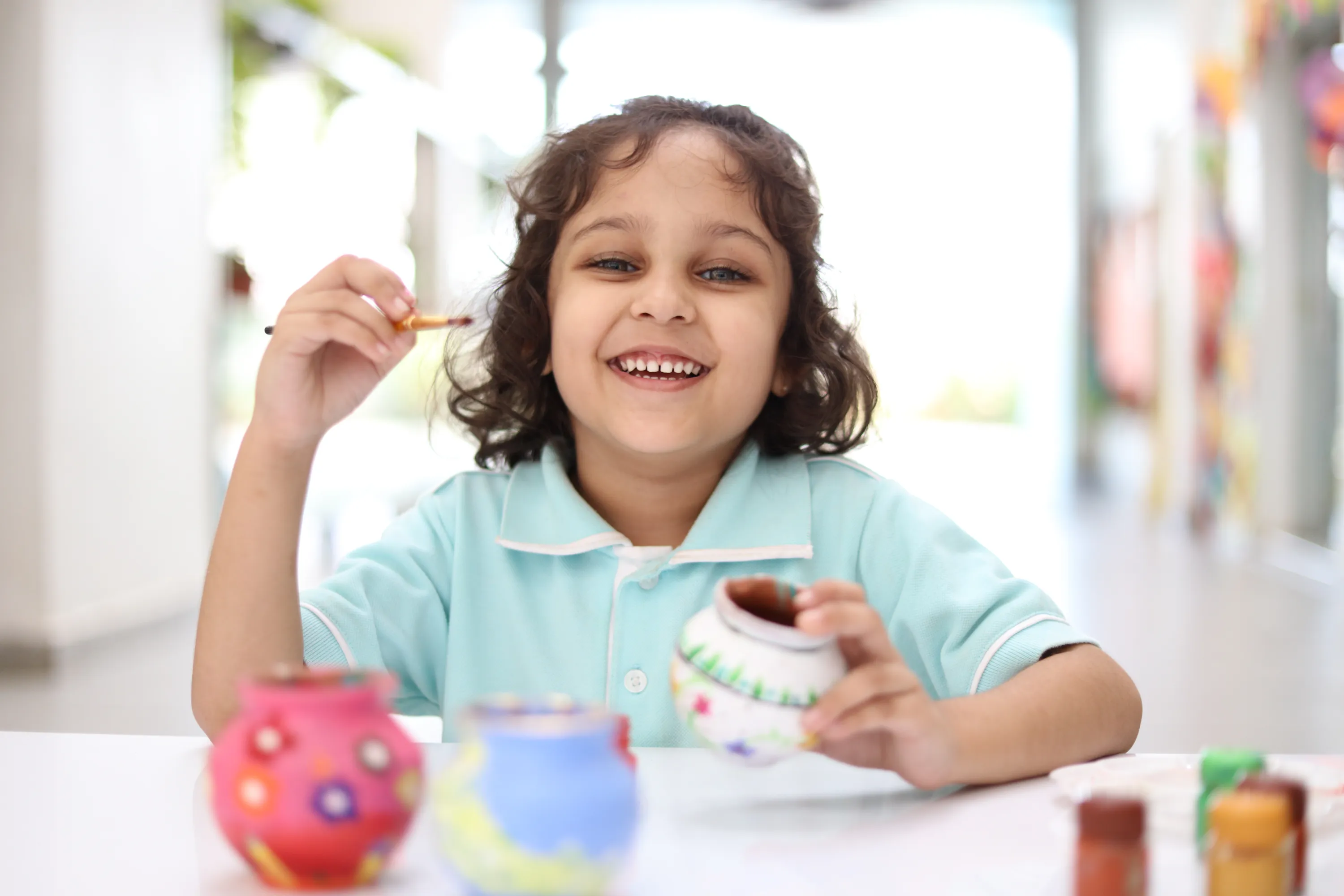
A nurturing start for children aged 2–6, building curiosity and confidence through play-based learning.
Explore Early Years Programme →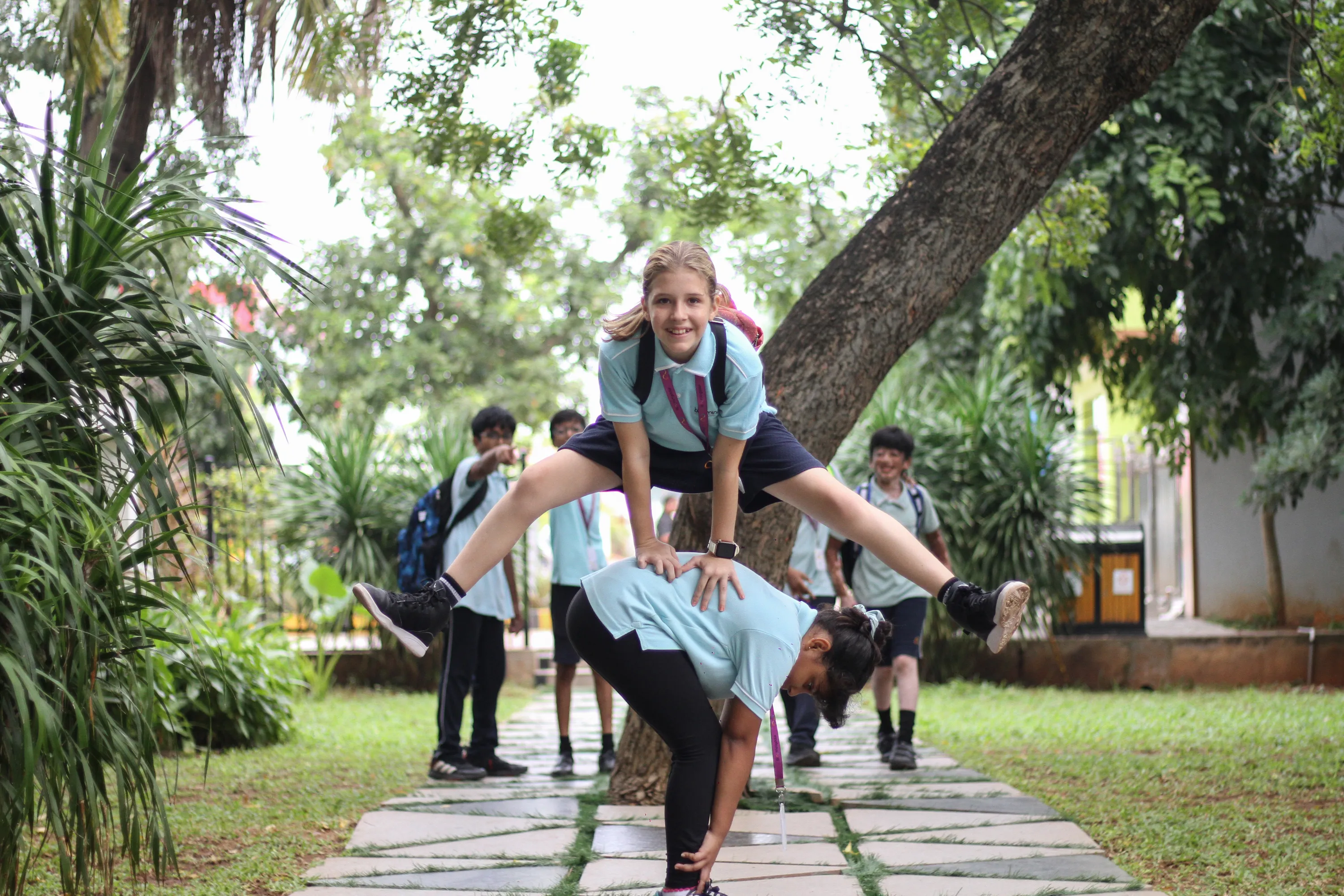
The IB MYP for Grades 6–10 builds on PYP foundations with interdisciplinary learning and global perspectives.
Explore Middle Years Programme →
Enrichment activities that go beyond the classroom through our partnership with the Ombrello academy.
Explore After School →Enter your child’s date of birth to discover the key steps and relevant information about how to join us
Contacting us is the first stage of the admission process. To make an initial enquiry,
please contact us by phone at +91 9525525525
or you can fill out our online enquiry form.
After your enquiry, we will send you an information package and advise you if you have any
questions about our school.
Everything parents want to know about the Primary Years Programme at BIS.
The PYP at Bloomingdale covers Nursery through Grade 5, catering to students roughly aged 3 to 12 years. It builds directly on the Early Years Programme and lays the foundation for the IB Middle Years Programme (MYP), creating a continuous and consistent learning pathway from the very beginning of a child's education.
The PYP uses an inquiry-based, transdisciplinary approach. Rather than teaching subjects in isolation, lessons are organised around real-world concepts that cut across disciplines. Children are encouraged to ask questions, research, explore multiple perspectives, and connect what they learn to their own lives. In the early years, learning is play-based and experiential; as students progress, it becomes increasingly conceptual and independent.
A traditional curriculum typically focuses on content delivery and memorisation. The PYP focuses on how children think — developing curiosity, critical reasoning, research skills, and the ability to apply learning to new situations. Assessment at BIS is built over time through projects, presentations, and collaborative work rather than one-day exams. The goal is genuine understanding and love of learning, not test performance.
The PYP framework is built around five interconnected elements: Concepts (powerful organising ideas that connect learning across subjects), Knowledge (significant, relevant subject matter), Approaches to Learning (skills such as thinking, research, communication, social, and self-management), Action (taking positive steps within and beyond the community), and Agency (the mindset and skills to make a real difference). At BIS, student agency is developed by giving children choices in their learning, incorporating their voice in designing learning pathways, and helping them set and track personal goals.
BIS's PYP is guided by five learning aims: (1) Create a lifelong love of learning through natural curiosity and inquiry. (2) Build responsible citizens who share and care about social challenges. (3) Equip students with critical 21st-century skills — thinking, research, communication, self-management, and collaboration. (4) Instil global cultural perspectives so students appreciate and understand their own and other cultures. (5) Encourage a proactive approach by enabling children to develop their voice and take ownership of their learning journey.
At BIS, grades are built continuously rather than through a single end-of-year test. Assessment happens through projects and research work, presentations, creative expressions, teamwork activities, and regular classroom observations. This approach gives a far more accurate picture of what a child genuinely understands and can do, and removes the pressure of high-stakes memorisation. Teachers use this ongoing data to provide individual feedback and adjust teaching to suit each child's needs.
Yes. A common misconception is that IB education is only for students planning to study abroad. In reality, over 51% of IB graduates in India pursue higher education within the country, and the IB is widely recognised by all major Indian universities. The PYP builds the critical thinking, research, and communication skills that serve students well across any academic pathway — including Indian entrance exams and university admissions — because it develops how students think, not just what they know.
Parents are active partners in the PYP learning community at BIS. They are invited to participate as resource persons and facilitators, contributing their knowledge and experiences to enrich the learning environment for all students. BIS maintains strong parent-school communication through regular progress reports, parent-teacher conferences, and an open-door policy for concerns. This partnership ensures that learning extends beyond the classroom and into the home.
Teaching in the PYP at BIS is differentiated — meaning lessons are adapted to meet the individual needs of each student rather than using a one-size-fits-all approach. BIS also maintains low student-teacher ratios, so teachers genuinely know each child and can identify diverse learning needs early. Beyond academics, teachers take a 360° holistic approach that considers each student's personal, social, and physical growth alongside academic development.
Yes. Holistic development is central to BIS's approach in the PYP. Sports, visual arts, performing arts, music, and design activities are integrated into the programme — not treated as extras. Children can also participate in Free Sports Clubs (football, basketball, tennis, swimming, and more) and creative clubs. Co-curricular work is documented as evidence of learning, building skills in collaboration, creativity, and resilience from the earliest years.